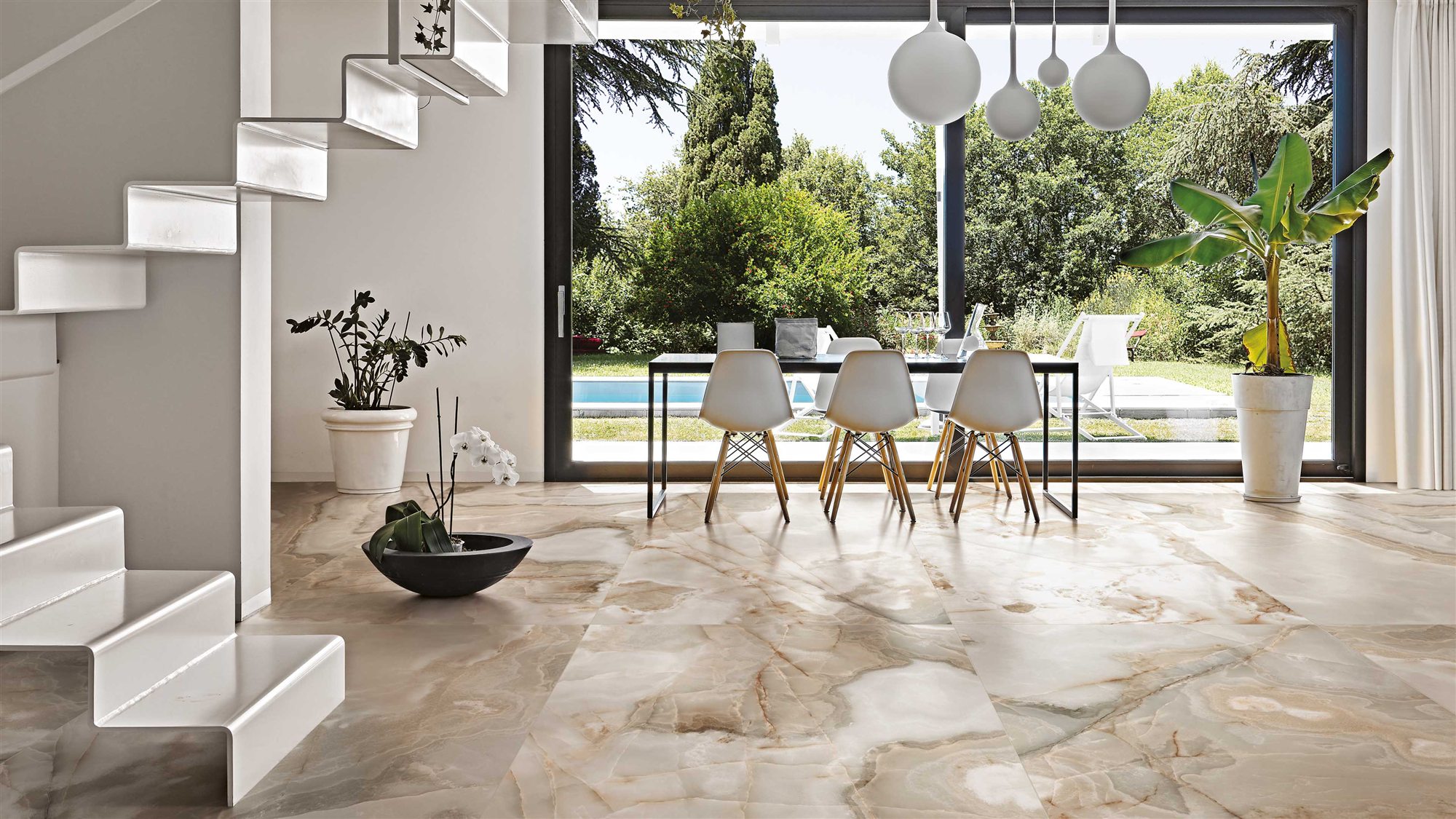
Beige and cream marble
Warmth without emphasis. Beige marble gives an interior a soft, sunlit undertone, suited to living, sleeping and unwinding.
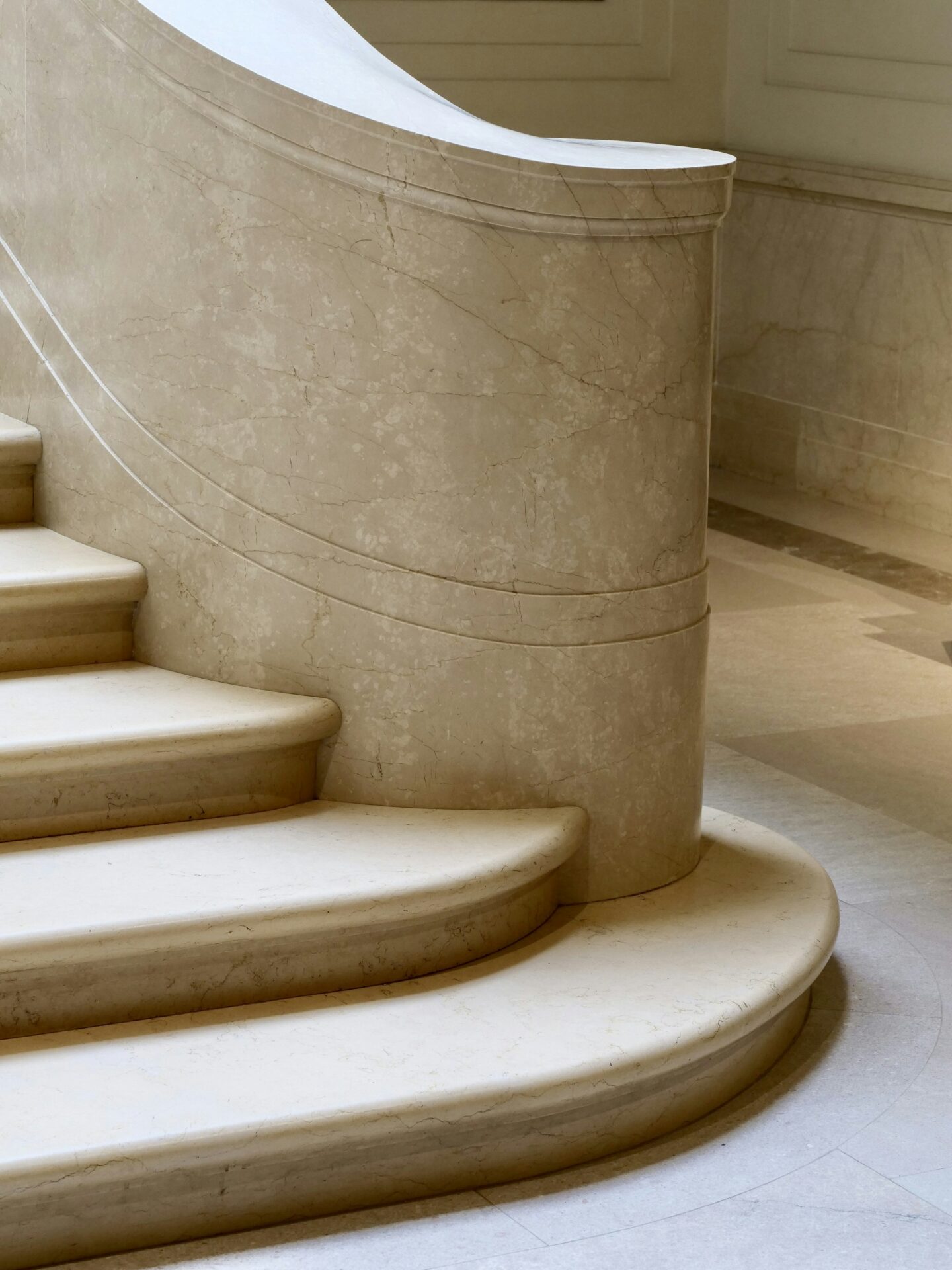
Beige and cream marbles
From sand-coloured and even to ivory with fine fossil traces or honey-coloured veins. Do ask which batches are currently available.
Oro Antico
Beige & cream · MarbleBotticino
Beige & cream · Marble
Natural stone: colour and veining vary from block to block and from slab to slab.

Soft light, warm floor
Beige and cream are the tones of sun-drenched coasts and old city palaces. They take in light softly and return it warmly. A floor in beige marble makes a living room feel more spacious and calmer, and a staircase in cream becomes a natural centrepiece.
Combine with oak in natural or smoked tones, linen, wool and rattan. Brass and bronze heighten the warmth; black metal adds just enough contrast to keep the whole from becoming too sweet.
- Floors in living room and hallway
- Staircases and stair treads
- Bathrooms with a warm atmosphere
- Window sills and fireplace surrounds
Beige marble for large surfaces
Beige marble has a particular quality: it makes a space feel larger and calmer without turning cold. The veining is usually understated, with soft clouding, fine fossil traces and the occasional honey-coloured vein. Large floors and continuous walls therefore form a calm whole.
That makes beige ideally suited to open-plan living spaces, hallways and staircases that continue over several floors. Even in large formats the image stays calm, while the natural variation keeps the surface from becoming monotonous.
With large surfaces, one thing matters even more: colour consistency. Natural stone is quarried in batches, and two batches of the same stone can differ in tone. Ideally, therefore, order the entire surface at once, including a reserve for cutting waste and any later repairs. And blend the tiles from different boxes before laying, so that small differences are distributed evenly across the floor.
Cream marble or limestone?
Anyone looking into cream marble soon comes across a geological nuance. In the natural stone trade, some cream-coloured stones are offered as marble, although strictly speaking they are a compact limestone. They have not been transformed by heat and pressure, but have a similar composition and can often be finished and used in the same way.
Indoors, this distinction is rarely a drawback. Both are calcareous, both react to acids and both call for impregnation and gentle cleaning. Density, hardness and polishability can, however, differ from stone to stone, and with them the suitability for, say, a busy hallway or a kitchen worktop.
For each stone, we tell you honestly what you are bringing into your home and where the material is at its best. You choose not by name, but by character and use. If you are looking for the same warm look outdoors, explore our limestone collection: there you will find cream tones for terrace and facade.
Questions about beige marble
Does beige marble show dirt less readily?
Generally, yes. The warm, mixed tone and soft veining disguise dust, sand and small marks better than bright white or deep black. That makes beige marble practical for hallways and living floors. It remains natural stone, however: acids leave dull marks here too, and stains are best wiped up immediately.
Does beige marble suit a modern interior?
Certainly. In large, clean-lined formats and with a honed finish, beige marble looks distinctly contemporary and architectural. Combine it with black or dark bronze metal, narrow joints and understated furniture. A classic look arises more readily with smaller formats, a polished surface and ornamentation. Format and finish therefore help to define the style.
Why can I see small fossils in the stone?
Many beige and cream stones formed from lime-rich deposits of marine organisms. Shell fragments and other fossil traces are therefore sometimes still visible as fine markings. This is not damage, but a natural characteristic that tells something of the stone's origin. How visible they are differs per stone and per slab.
Which wood suits beige marble?
Choose wood that follows the undertone of the stone or deliberately counters it. Light oak and ash heighten a soft, light atmosphere. Walnut and smoked oak give depth and contrast. Avoid wood in exactly the same tone as the stone: both then lose their character. Place a stone sample on your floor or cabinet sample to judge.

Warmth you can feel
Request samples of beige and cream marble and place them next to your wood, textiles and wall colour.