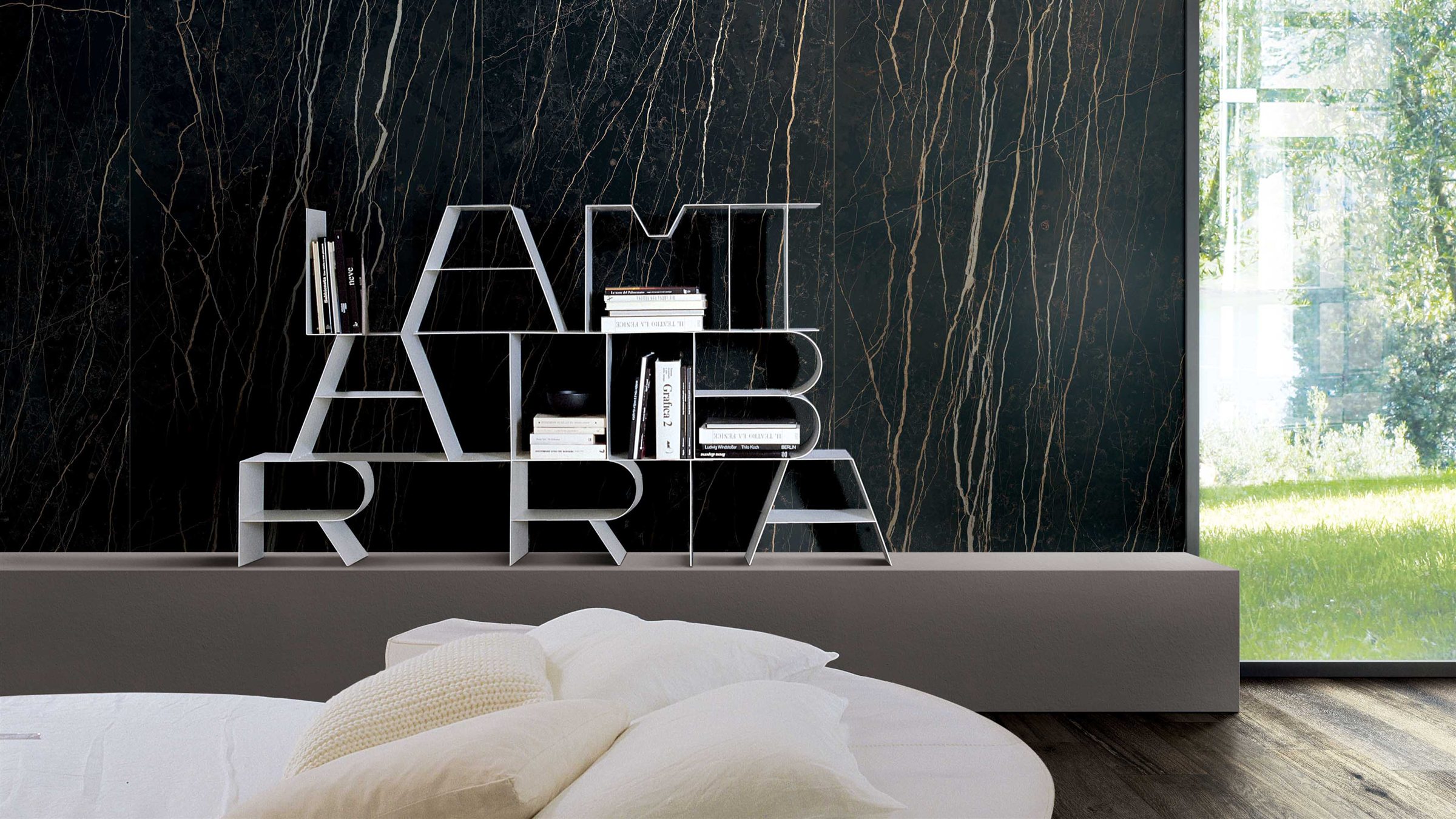
Black marble
Depth that holds the light. Black marble gives a space weight and focus, with veins that run across the surface like drawings.
Black marbles
From almost plain anthracite to black with a fine network of white lines or capricious golden tones. Every batch has its own veining.
Nero Cosmico
Black · MarbleNero Oro
Black · MarbleNero Venato
Black · MarblePortoro
Black · MarbleNoir Saint Laurent
Black · MarbleNero Marquina
Black · MarbleNero Dorato
Black · Marble
Natural stone: colour and veining vary from block to block and from slab to slab.

Graphic and restrained
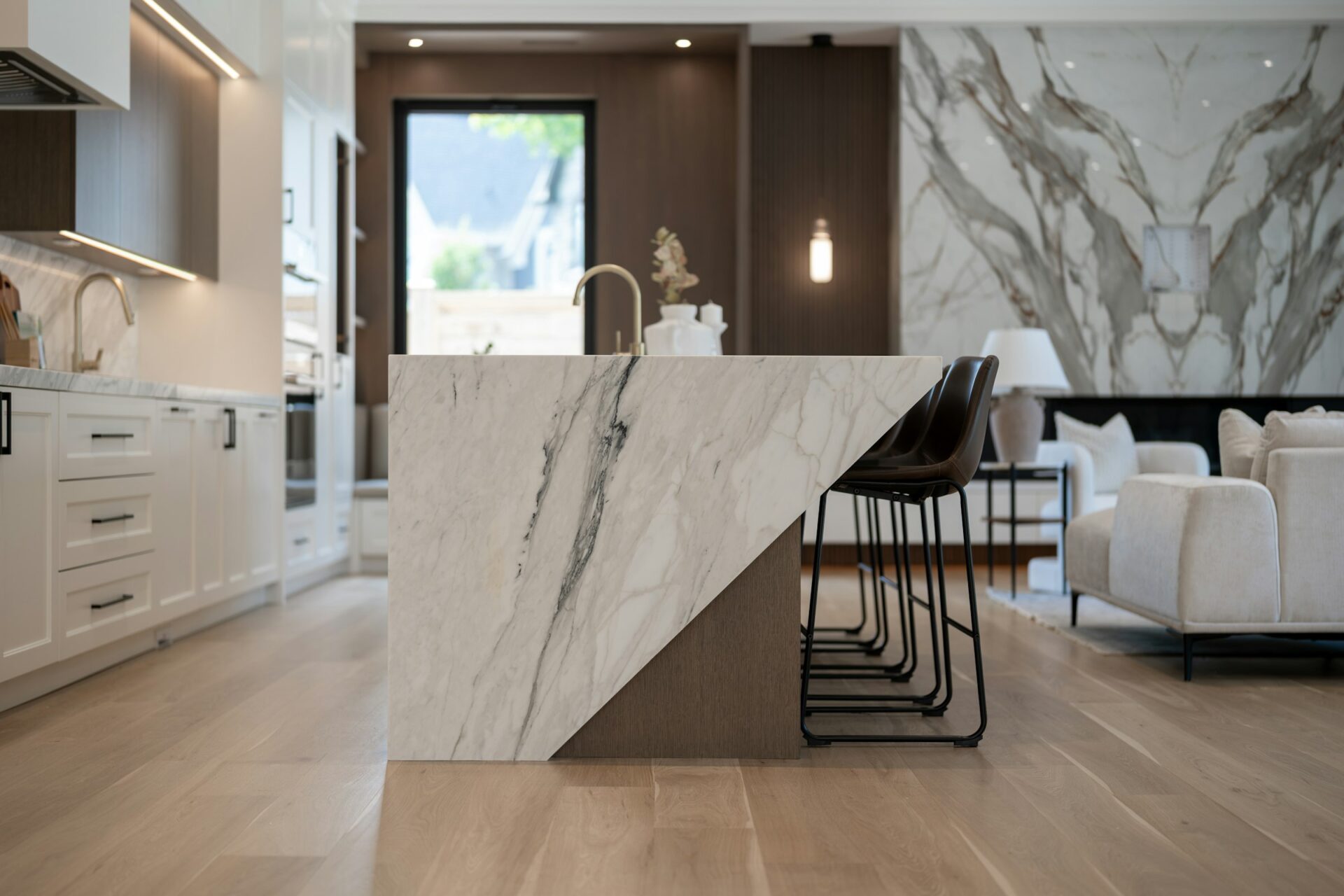
Black marble acts as a frame. A kitchen island, a washbasin or a fireplace surround in black draws the eye and brings calm to the rest of the space. In a small room it creates intimacy, in a large one structure.
Set it against pale oak, walnut or lime plaster for contrast. Brass and bronze glow against black, while brushed stainless steel keeps the whole crisp and contemporary. Velvet and wool in deep tones make the atmosphere warm and enveloping.
- Kitchen islands and worktops
- Washbasins and bathroom vanities
- Fireplace surrounds and feature walls
- Coffee and side tables
Black marble and the role of light
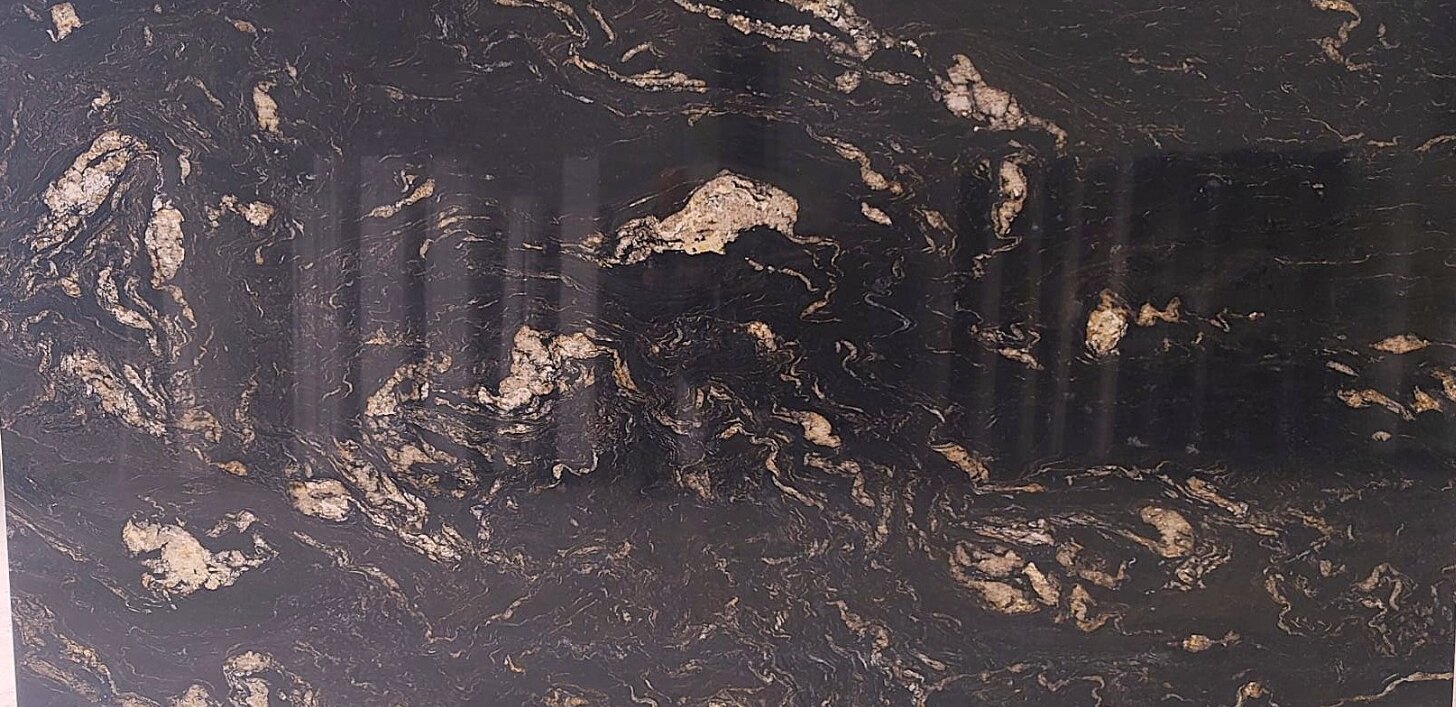
Black marble behaves differently from light stone. Where white reflects and diffuses light, black holds on to it. A polished black surface therefore acts almost as a mirror: it shows the surroundings, the lamps and the daylight that grazes across the top. That gives depth, but also calls for a considered lighting plan.
Position light sources so that they bring out the veining without dazzling. Raking light from the side brings the veins to life; a spotlight directly above a polished top mainly produces a harsh reflection.
With a matt finish, the picture changes. Honed black marble scatters the light and therefore often looks slightly greyer, softer and more velvety. If you wish to retain the deep colour, you can opt for a colour-enhancing impregnator. Request samples in both finishes: with black, the difference between gloss and matt is particularly marked.
Black marble in daily use
Black marble is just as calcareous as any other marble, but it reveals more honestly what happens to it. An etch mark from lemon or vinegar appears on polished black as a pale, dull patch. Limescale from hard water leaves its trace, and fingerprints and fine scratches catch the light.
If you want black without constantly seeing those marks, choose a leathered or brushed finish. The gently undulating surface renders small signs of use virtually invisible and is pleasant to the touch. In a bathroom it helps to squeegee walls and washbasin dry after use and to avoid acidic limescale removers.
Polished black remains a beautiful choice for places that are mainly looked at: a wall panel, a fireplace surround, the side of a cabinet. There its mirror-like depth comes fully into its own, without daily use leaving its traces.
Questions about black marble
Where do the white veins in black marble come from?
The white veins are fractures in the original rock that, over time, were filled with calcite crystallised from mineral-rich water. The black ground colour itself usually comes from organic matter or finely dispersed carbon. Each slab thus tells part of the stone's geological history.
Does black marble suit a small space?
Yes, provided you use it deliberately. In a cloakroom or compact bathroom, black can create an enveloping, intimate effect, especially with warm indirect light. If you would rather keep the space open, use black as an accent: a washbasin, a skirting or a top, combined with lighter walls and floors.
Can I combine black marble with white marble?
Yes, it is a classic combination with many faces. Think of a chequerboard floor, a black skirting beneath white walls or a black top on a white cabinet. Choose stones whose veining corresponds: white with grey veins suits black with white veins, while warm white goes better with black with golden tones.
How does black marble look after a number of years?
Like all marble, black marble develops a patina. On walkways and work surfaces the sheen softens and more matt areas appear here and there. On a leathered finish this is barely noticeable, on polished black more so. Many owners see it as character. If you want the original look back, have the surface refreshed by a specialist.

Black, seen up close
Black marble changes with every finish. Request samples in gloss and matt and see the difference in your own light.