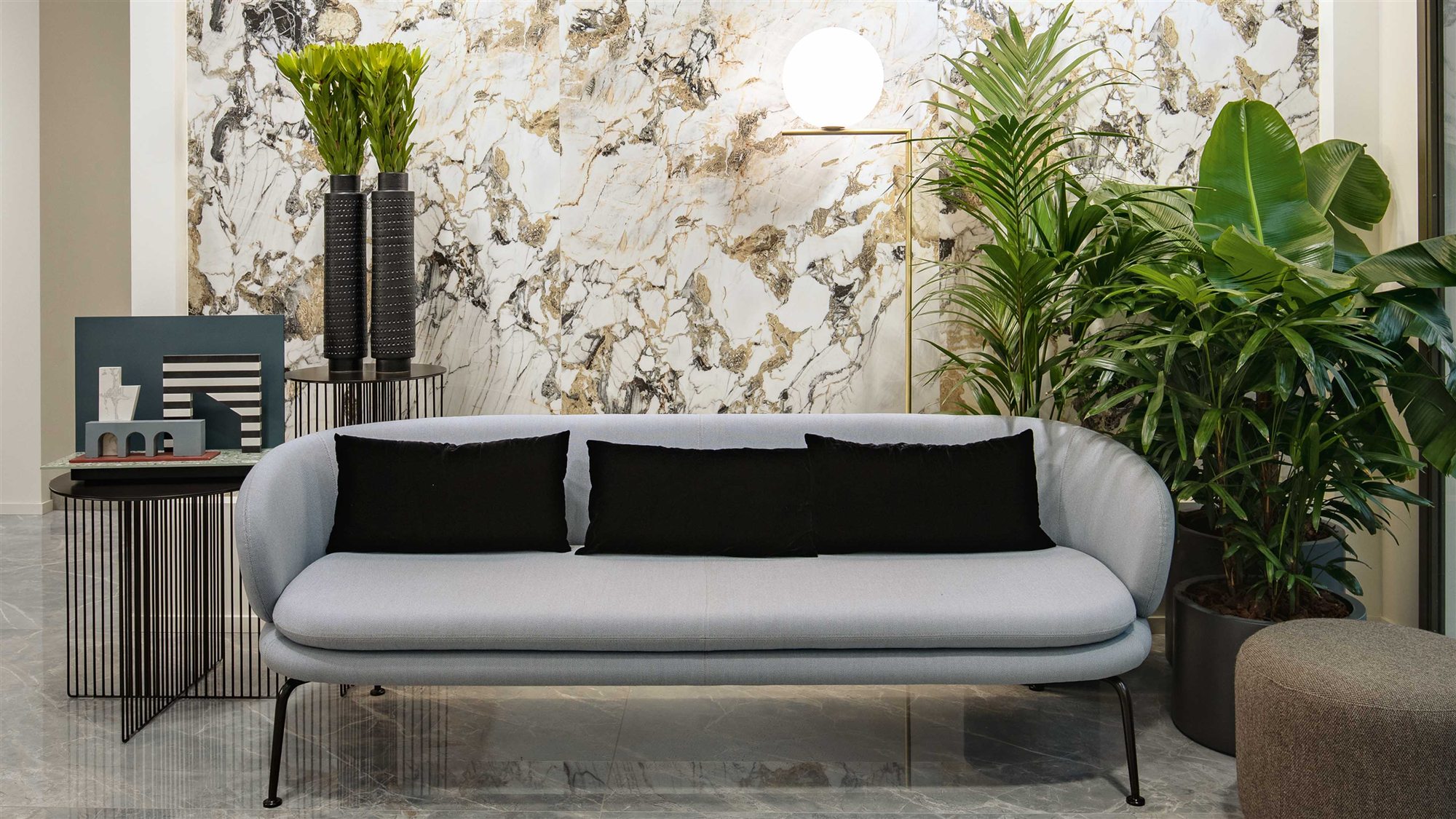
White marble
Light that seems to live within the stone. White marble brings clarity to a space, from a sober, almost plain ground to graphic grey or golden veining.
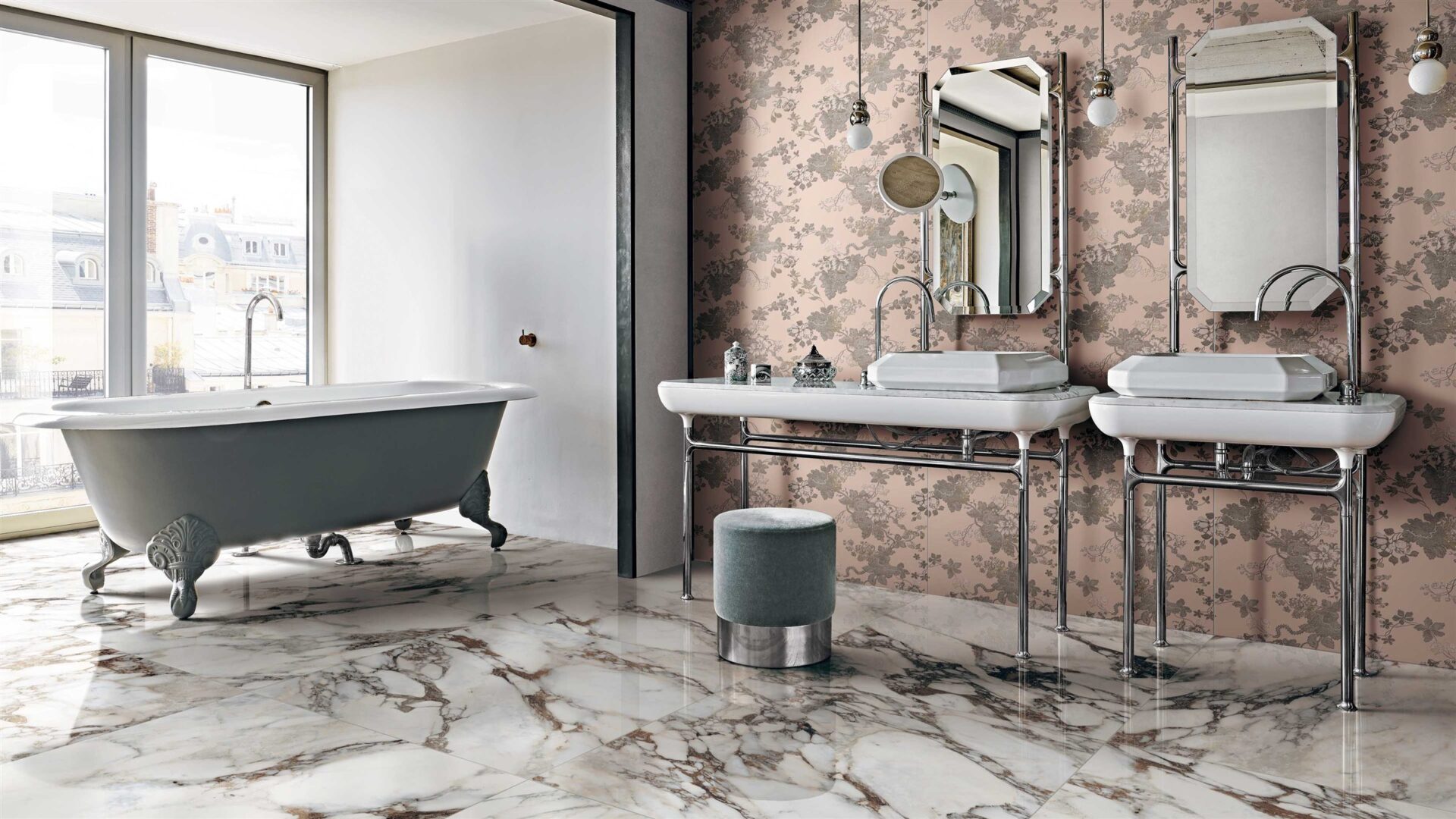
White marbles
Each stone has its own white ground tone, from cool to almost ivory, and its own vein pattern. Availability on request.
Calacatta Viola
White · MarbleBianco Fantastico
White · MarbleBianco Velato
White · MarbleBianco Seta
White · MarbleMacchia Vecchia
White · MarbleBreccia Capraia
White · MarbleCalacatta Lilla
White · MarbleCalacatta Oro
White · MarbleArabescato Corchia
White · MarbleCalacatta Altissimo
White · Marble
Natural stone: colour and veining vary from block to block and from slab to slab.

Clarity with depth
White marble enlarges a space. It reflects daylight, makes a bathroom lighter and gives a worktop a natural calm. The veining ensures that white never becomes sterile.
Pair cool white with smoked oak or black steel for contrast. Warm white calls for brass, linen and bouclé. With white marble veined in gold, match the metal to it: brushed brass or bronze completes the picture.
- Bathroom walls and showers
- Worktops and kitchen islands
- Floors in large formats
- Tables and washbasins in solid marble
Choosing white marble: ground tone and vein
With marble, white is never simply white. Each stone has its own ground tone: cool with a hint of blue, neutral as paper, or warm towards ivory. Place a sample next to your wall colour, window frames and floor, and view it in daylight as well as under artificial light. A cool ground tone can look chilly in a north-facing room, whereas a warm white turns soft there.
Then look at the vein. Fine, scattered veining brings calm and works on large floors and walls. Broad, graphic veins need space and are at their best on a kitchen island, a splashback or a bathroom wall seen as a single whole. There you can also opt for bookmatching: mirrored slabs in which the veins continue symmetrically.
With boldly veined white marble, slab selection matters. During a slab selection by appointment you see which slabs together create the finest image, so that the veins follow a logical course across the entire surface.
Living with white marble
White marble is a living material. It consists largely of calcite and therefore reacts to acids: a splash of lemon juice, vinegar or wine leaves a dull mark. On a polished surface this shows sooner than on a honed or leathered finish. Stains from coffee, oil or red wine also stand out more on a light ground than on dark stone.
That does not make white marble unsuitable for daily use; it does call for a considered approach. Have the stone impregnated, so that liquids are absorbed less readily. Blot spills immediately and clean with a pH-neutral product. Use coasters under glasses and bottles.
And accept that, over the years, the stone will acquire a soft patina. If you would rather not see it, the surface can later be reground and refinished by a specialist. In this way white marble can last for generations, in the condition you choose.
Questions about white marble
Can white marble discolour?
Fundamentally, white marble keeps its colour. In heavily used areas it may, however, develop a warmer patina, and absorbed stains or unsuitable products can leave a yellowish cast. Some white stones also contain traces of iron-bearing minerals that can discolour with prolonged moisture. Use only products expressly suitable for natural stone.
Is white marble suitable for a shower?
Yes. White marble is widely used for shower walls and bathroom floors. For the floor, choose a finish with more grip than polished, such as brushed or leathered, and use mild, pH-neutral cleaners rather than acidic limescale removers. Limescale from hard water is best prevented by squeegeeing the walls dry after showering.
What is bookmatching?
In bookmatching, two consecutive slabs from the same block are placed side by side as mirror images, like an open book. The veins then run on symmetrically. With boldly veined white marble, this creates a graphic effect for walls, splashbacks and kitchen islands. It calls for careful slab selection and dimensioning, which we work out in consultation with you.
Can I combine white marble with other natural stone?
Certainly. White marble combines well with dark stone for contrast, for example in a skirting or threshold, or with a warmer stone on the floor. Make sure the ground tones do not clash: a cool white next to a yellowish cream can look restless. Always lay the samples out together, in the light of your own space.

White marble in your own light
Request samples of the white stones that appeal to you and judge ground tone and veining in your own space.