
Green marble
A stone with the depth of a forest. Green marble is distinctive, but never loud: a material for those who want to give a space character.
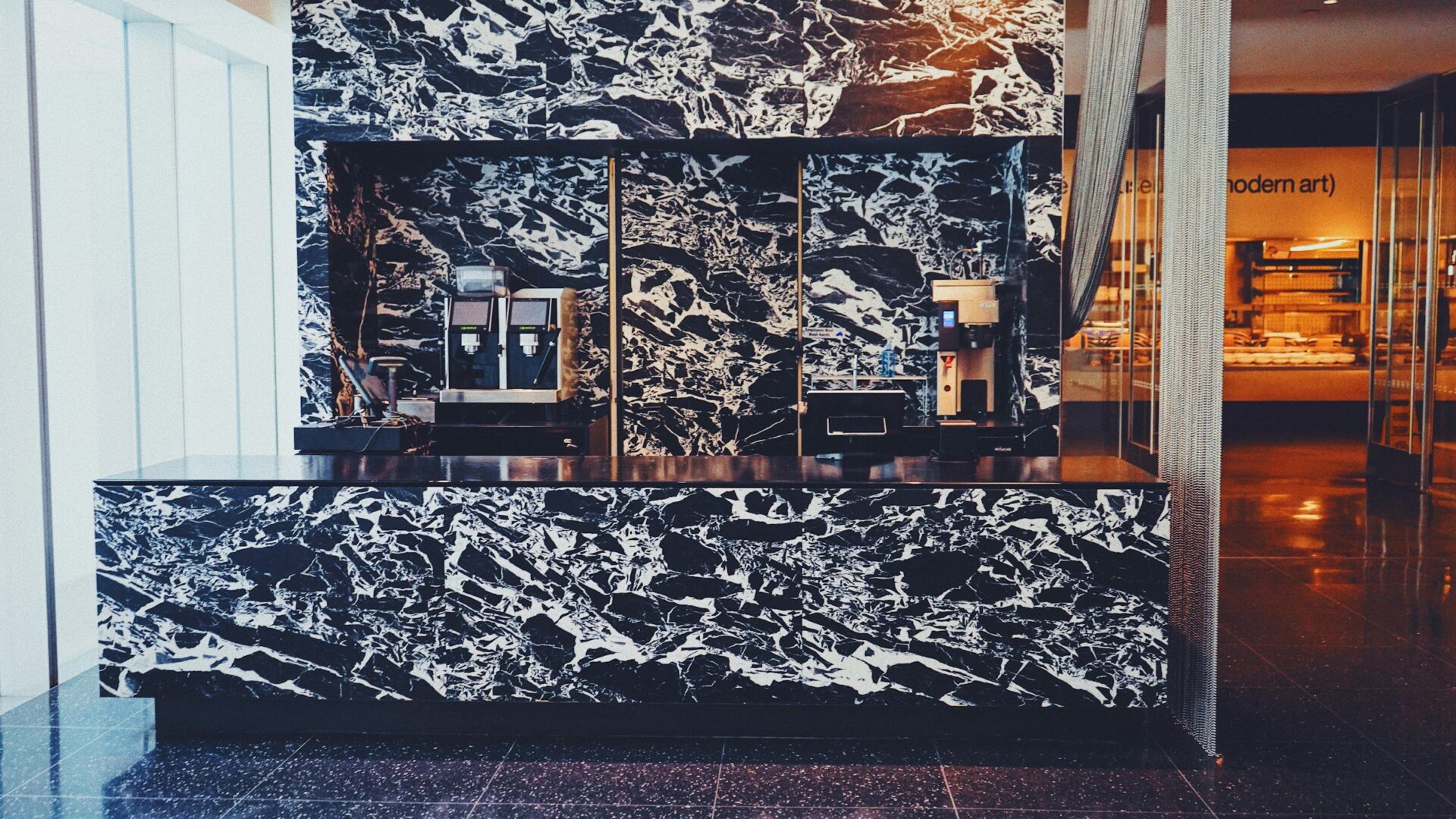
Green marbles
From near-black forest green with a web of white veins to lighter, mottled jade green. For each stone, we are happy to explain what it is geologically.
Verde Smeraldo
Green · MarbleVerde Guatemala
Green · MarbleVerde Alpi
Green · MarbleVerde Giungla
Green · MarbleVerde Vento
Green · MarbleVerde Cristallo
Green · MarbleVerde Amazzonite
Green · MarbleBreccia Quattro Stagioni
Green · Marble
Natural stone: colour and veining vary from block to block and from slab to slab.

Colour as centrepiece
Green marble asks for a place where it will be seen. A washbasin, a side table, a bar top or a fireplace surround in green naturally becomes the centrepiece of a room, without the rest having to give way.
Green and brass are a classic pairing: the warm metal makes the cool stone glow. Combine further with walnut, cognac leather, velvet in ochre or rust and walls in off-white. For a more modern look, set green against pale oak and matt black.
- Washbasins and bathroom vanities
- Side and coffee tables
- Bar tops and worktops
- Cladding for cabinets and objects
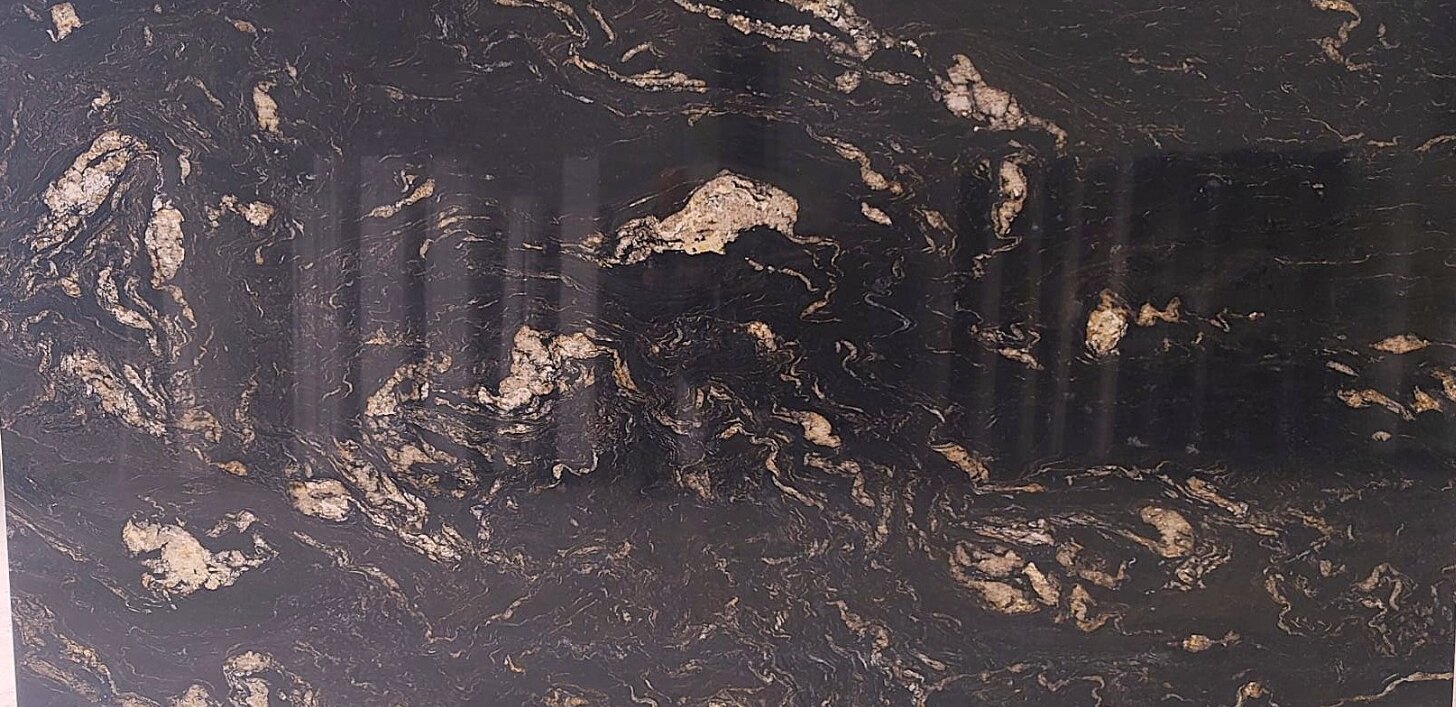
What green marble is, geologically
Green marble is a collective name. Much of the green natural stone sold as marble consists, geologically speaking, wholly or largely of serpentinite: a rock that forms when material from the Earth’s mantle reacts with water. The deep green comes from the mineral serpentine; the white veins that often run through it usually consist of calcite or dolomite.
For the appearance, that makes little difference. Green marble can be sawn, polished and used like marble, and it has the same cool, solid presence. For its properties, however, it can matter. Hardness, sensitivity to acids and response to moisture differ per stone, and sometimes even within a single slab, where green areas and white veins behave differently.
That is why we advise per stone and per application. A green washbasin makes different demands from a floor or a side table. Do ask about the background of the stone you are considering.
Installation and care
When installing green marble, craftsmanship matters. Some green stones are sensitive to moisture: with an ordinary cement-based tile adhesive, the water from the adhesive can cause the stone to bow or curl, or discolouration may occur. These stones are therefore often fixed with a rapid-setting adhesive or a reactive resin. Which method is right depends on the stone, the format and the substrate.
After installation, care is comparable to that of other marble. Impregnate the stone, clean with a pH-neutral product and avoid acidic or abrasive products. Pay particular attention to the white veins: they often consist of calcite and are therefore more sensitive to acids than the green surface around them.
With that care, green marble retains its calm, deep character. It remains a stone for those who want to give a space something of its own, and to go on seeing that individuality for many years.
Questions about green marble
Is green marble suitable for a washbasin?
Yes, green marble is a much-loved choice for washbasins and bathroom vanities. Do pay attention to the stone, though: some green stones are more sensitive to moisture and acids than others. Have the washbasin properly impregnated, dry it after use and choose soaps and cleaners free of acids. On a polished surface, the depth of the green is shown at its finest.
How much green suits an interior?
Green marble is at its strongest when given space. One distinctive element, such as a washbasin, table or fireplace, is often more powerful than an entirely green room. If you do want a whole wall or floor, choose a stone with calmer veining and keep the other materials restrained in colour and pattern.
How does green marble look under artificial light?
Green responds strongly to the colour of light. Under warm light it becomes deeper and slightly more olive, under cool light fresher and bluer. In dimmed evening light a dark green can look almost black, with the white veins as glowing lines. View a sample in the evening too, under the lighting you actually use.
Which finish shows green marble at its best?
Polished brings out the depth and the contrast between ground colour and veins most strongly; green then becomes almost jewel-like. Honed makes the stone softer and slightly lighter in tone. A leathered finish is a fine middle way for tops that are touched often. Ideally, compare samples in several finishes side by side.

Green in your hands
Green marble is hard to capture on a screen. Request samples and experience its depth up close.